

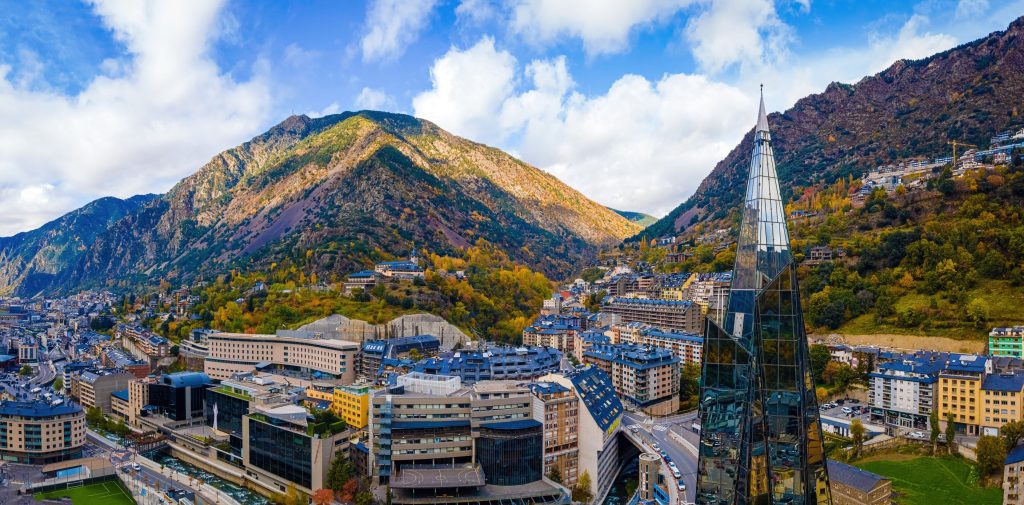
Moving to Andorra is not simply a matter of obtaining an immigration permit. A relocation project becomes tangible when a family has a place to live: a purchased house, a renovated apartment or a plot of land on which to build. And that home is not just a simple purchase. In the Principality, it is governed by a prior authorisation regime, a specific tax on foreign investment, parish-level planning regulations and a strictly regulated architectural profession.
We have prepared this article with Engage, a tax and legal advisory firm based in Andorra, to explain how the property and built-environment aspects of a relocation project should be coordinated, and why the order in which these two dimensions are addressed can have a direct impact on the final cost.
Key point. In Andorra, a property investment made by a person subject to the foreign investment regime requires prior administrative authorisation, subject to the exceptions provided by law. This regime is governed, among other texts, by the Llei 5/2025, del 6 de març, per al creixement sostenible i el dret a l’habitatge. A person who has recently obtained Andorran residency may also continue to be treated as a foreign investor until they can demonstrate three years of effective residence under the conditions laid down by the regulations.
Why housing should be one of the first parts of the project, not the last
In many relocation projects in Andorra, the property itself enters the conversation relatively late. The initial discussions tend to focus on residence permits, personal taxation, ownership structures and, in some cases, the creation of a company. Housing is treated as a consequence: once the move is complete, the search can begin.
Yet this sequence can become costly for one simple reason. The property is not merely the end point of a relocation project. It is a legal component in its own right, subject to its own authorisation regime, specific taxation and quantitative limits.
Three factors, which are often not anticipated early enough, explain why it may be useful to reverse the usual order.
The first is that an acquisition falling within the foreign investment regime requires prior administrative authorisation. It is not simply a registration formality completed after signing.
The second is that the law limits the number of properties a foreign investor may hold and sets rules for how those holdings are counted over a defined period.
The third is that, for the purposes of this legislation, foreign investor status does not necessarily disappear on the day a residence card is obtained. It may continue to apply until the person can demonstrate three years of effective and permanent residence during the ten years preceding the application, in accordance with the conditions set out by law.
In other words, a person who has only recently obtained residency in Andorra may still fall within the foreign investment regime when purchasing property. In that case, they remain subject to prior authorisation, quantitative limits and the applicable specific taxation.
Discovering these constraints after entering into a contractual commitment can considerably complicate a transaction that could have been assessed beforehand.
By contrast, someone who begins by structuring the property side of their project often finds that it can also form part of their residency strategy.
Investment in real estate located in Andorra is one of the recognised forms of investment in Andorran assets for residence without gainful activity. Properly structured, a single investment may therefore serve several objectives.
Residency and property: a closer relationship than it may appear
Residence without gainful activity, commonly referred to as passive residency, is intended for people who settle in Andorra without carrying out a professional activity there. Among other requirements, it involves an obligation to invest in Andorran assets, which may include real estate.
The principal applicant must invest, permanently and effectively, at least one million euros in one or more categories of Andorran assets: real estate located in Andorra, shareholdings in resident companies, debt or financial instruments issued by resident entities, Andorran investment funds under the conditions laid down by the regulations, debt instruments issued by an Andorran public administration, qualifying life insurance products or other eligible assets.
This amount may be reduced to four hundred thousand euros when the investment is made under the conditions applicable to the Fons d’Habitatge.
There is also an especially important point for anyone considering property investment: when investment in Andorran assets is made wholly or partly through real estate, more than eight hundred thousand euros must be allocated to each property unit acquired, under the conditions set out by the regulations.
An apartment worth six hundred thousand euros therefore does not, by itself, satisfy the property-investment requirement, regardless of its architectural quality or location.
| Requirement | Amount in Andorra | Detail |
|---|---|---|
| Investment in Andorran assets | €1,000,000 | Permanent and effective, in one or more eligible categories |
| Investment through the Fons d’Habitatge | €400,000 | Reduced amount under the conditions set out by the regulations |
| Per property unit acquired | more than €800,000 | Where the investment is made, even partly, through real estate |
| Amount applicable to the principal applicant | €50,000 | According to the regime in force |
| Per dependant | €12,000 | According to the regime in force |
| Deadline for completing the investment | 6 months | Subject to the conditions and possible extensions provided by the regulations |
The property timetable and immigration timetable therefore need to be coordinated. This means understanding from the outset how long an acquisition may realistically take, but also, where a construction or renovation project is planned, how much time will be required to assess and carry out the work.
This is precisely why an architectural assessment and feasibility study before purchase can be useful before making a final commitment to a property.
Buying property in Andorra as a foreign investor: the full framework
The principle established by the legislation is clear: la inversió estrangera immobiliària al Principat d’Andorra requereix sempre autorització administrativa prèvia.
Foreign real estate investment in Andorra therefore requires prior administrative authorisation from the ministry responsible for foreign investment. The law does, however, provide for certain exceptions, particularly acquisitions resulting from death and those arising from the liquidation of a matrimonial property regime, which are subject to the specific rules applicable to those situations.
Who is considered a foreign investor?
The definition is broader than the ordinary meaning of the word “foreign”.
It includes, among others, individuals who are not resident in Andorra, certain foreign legal entities and certain Andorran legal entities with foreign participation under the conditions defined by the legislation.
It also includes individuals who are resident in Andorra but who make a property investment without being able to demonstrate at least three years of effective and permanent residence during the ten years preceding the application.
This is one of the points that most often comes as a surprise: obtaining residency does not necessarily mean immediately ceasing to be subject to the foreign real estate investment regime.
Quantitative limits
For an individual subject to this regime, prior authorisation falls within the conditions and limits established by the regulations.
These include, among other possibilities, ownership of one plot of land on which a single detached house is built or is to be built; or one detached house, two apartments, two dwellings or two studios with their ancillary spaces within the limits defined by law; or six parking spaces.
The calculation takes the relevant assets and rights into account in accordance with the applicable rules, while certain acquisitions, particularly those resulting from death or the liquidation of a matrimonial property regime, receive specific treatment.
For anyone considering buying land in order to build a house, the legal question of the acquisition should therefore be examined alongside a second question: what can actually be built on the plot?
Two plots of the same size can offer very different possibilities depending on their planning classification, geometry, gradient, access or natural constraints. We explore these points in more detail in our article on what to check before buying land in Andorra to build.
What is expressly prohibited
The law prohibits certain foreign investments whose purpose is property development, understood as the acquisition or construction of buildings for the purpose of selling them, subject to the exceptions provided by the regulations.
Among other situations, certain developments intended for the rental of homes as habitual and permanent residences and complying with the conditions laid down by law, as well as certain transactions located in parishes that have adapted their planning framework to the applicable legislation, are subject to specific provisions.
Certain structures that may constitute an abuse of law are also regulated or prohibited, as are, under the conditions set out in the regulations, foreign real estate investments intended for tourist apartments and properties holding an authorisation for tourist accommodation use.
This last point deserves particular attention from anyone considering a seasonal rental investment in a mountain resort.
Beyond these specific prohibitions, authorisation may also be refused in the circumstances provided by legislation where the investment may affect, among other matters, sovereignty, security, public and economic order, the environment, the labour or housing market or, more broadly, the general interest of the Principality.
The tax cost of the acquisition
Several taxes must be taken into account when a foreign investor acquires property.
The first is the tax on foreign real estate investment. The regime currently in force provides, among other rates, for 6% and subsequently 10%, depending on the nature and position of the investment within the limits defined by the regulations.
The second component relates to the taxation applicable to the property transfer itself. The final cost therefore depends on the buyer’s status, the nature of the transaction, previous investments and the rules applicable to the property concerned.
Engage provides a more detailed explanation of these mechanisms and their impact on a purchase in its guide to the taxation of property acquisitions in Andorra.
| What the acquisition triggers | Rule in Andorra | Practical consequence |
|---|---|---|
| Prior authorisation | Mandatory for the relevant foreign investments | Subject to the exceptions provided by law |
| Foreign investment tax | 6%, then 10% depending on the case | Must be considered from the initial assessment of the transaction |
| Transfer taxation | According to the applicable regime | Payable upon acquisition |
| Number of properties held | Limited | Successive acquisitions must be taken into account |
| Property development | Prohibited or regulated depending on the situation | Exceptions provided by the regulations |
| Tourist-use property | Specific restrictions | Must be checked before investing |
In addition to taxation, the economics of the architectural project itself also have to be considered.
For a new-build project, the land price is only one part of the budget. Excavation, retaining structures, construction, studies, professional fees, equipment and external works can represent a significant proportion of the investment.
In a renovation, the condition of the building, its structure, existing services and the level of transformation required play the same role.
For this reason, the budget should be considered as a whole from the outset. We explain this approach in more detail in our article on controlling the budget of a construction project in Andorra.
Building or renovating in Andorra: building in the mountains is different
Once the land has been purchased or the property identified, the nature of the project — and the specialists involved — changes.
The issue is no longer purely patrimonial. It becomes technical, architectural, regulatory and parish-specific.
This is where the architect intervenes to analyse the potential of the property or plot, design the project and prepare the documentation required for the relevant administrative procedures.
Parish planning regulations
Each comú has its own Pla d’ordenació i urbanisme parroquial and the regulations that accompany it.
A project must therefore be assessed against those documents, but also against the general framework applicable throughout the Principality.
The Reglament de construcció is one of the main national reference texts. Among other matters, it defines construction and habitability parameters as well as procedures relating to building applications and their authorisation.
For a plot of land, this means examining buildability, height limits, setbacks, permitted uses and siting, as well as the actual geometry and topography of the site.
The cadastral area alone is not enough to determine what can be built.
Prior authorisation and building permits
New construction, extensions, certain alterations affecting the structure or external openings, earthworks, demolition and other works specified by the regulations are subject to the relevant authorisation procedures.
The documents required and the procedure to be followed therefore depend on the exact nature of the project.
These procedures are not separate from the design process. They form part of the development of the architectural project itself.
We explain this sequence in greater detail — feasibility, design, technical development, administrative procedures, contractor consultation and construction — in our article on the stages of an architectural project in Andorra.
An architect registered with the professional body
The practice of architecture in Andorra is regulated.
Authorised architects are listed, among other sources, by the Col·legi Oficial d’Arquitectes d’Andorra, and professional documents subject to professional validation must follow the applicable procedures before being submitted to the Administration.
Collaboration with a foreign architect remains possible, but it does not replace the obligations associated with regulated professional acts in Andorra.
For a residential project, this also means that the architect’s role is not limited to producing an image or a plan.
In a new-build chalet project in Andorra, the study begins with the site itself: regulations, slope, access, orientation, views, surrounding buildings and technical constraints. The architectural project is then developed from those conditions.
Avalanche risk
Regulatory mapping of natural hazards can also have a significant impact on both buildability and design.
In certain exposed areas, the regulations impose specific requirements that may affect the siting, structure or architectural elements of a building.
The important point for the buyer is not to know every rule by heart.
It is to understand that natural hazards must be considered before the design is fixed.
Depending on the area and the nature of the project, exposed façades, openings, roofs, chimneys, cantilevers and other elements may be subject to specific requirements.
These are not theoretical constraints.
They explain why a house designed for a flat site or a very different environment cannot necessarily be transferred unchanged to a mountain plot in Andorra.
They also explain why a site selected mainly for its views and price should be assessed at an early stage from both an architectural and regulatory perspective.
The objective is not simply to determine whether the plot is “buildable”.
It is to understand what project can realistically be developed there.
The same logic applies to existing buildings.
For a chalet or apartment renovation in Andorra, the first step is to understand the building: its structure, layout, openings, services, natural light, circulation and potential for transformation.
A renovation therefore does not necessarily begin with materials or finishes. It begins with an understanding of the existing building.
Finally, there is the question of timing.
The content of new-build, renovation, extension and rehabilitation projects, together with the documents required for the corresponding administrative applications, forms part of the applicable regulatory framework.
A construction project in Andorra therefore has its own administrative timetable.
When a property project is being developed in parallel with a residency or investment procedure, those different schedules need to be coordinated from the outset.
Case study: when the order of operations makes the difference
Fictional example for illustrative purposes.
Matthias, an industrial business owner, and a mountain chalet to renovate
Matthias, aged fifty-two, sells the majority of his industrial group and decides to move to Andorra with his partner and daughter. He will no longer carry out an operational business activity and is considering residence without gainful activity.
He falls in love with an older chalet at altitude, with a large south-facing terrace, offered for sale at €950,000. He wants to carry out a major renovation and extension.
In the scenario where he commits first and investigates afterwards, several obstacles arise one after another.
The foreign investment authorisation has not been anticipated.
The extension alters the structure and external openings, so the corresponding authorisations and technical project are required.
In addition, the façade he wanted to open up further is subject to site-related regulatory constraints, forcing him to reconsider part of his architectural intention.
In the scenario where the project is assessed beforehand, the sequence is reversed.
An authorised architect examines the plot, planning regulations and site constraints before any final commitment is made.
At the same time, the patrimonial side of the project is structured so that the property investment is consistent with the requirements of the intended residency route.
The foreign investment authorisation is processed at the appropriate stage, and the budget includes from the outset both the taxation of the acquisition and the main technical implications of the project.
This preliminary assessment makes it possible to anticipate taxation, check the applicable thresholds, coordinate the various timelines and develop the architecture around the actual constraints of the property.
The ambition of the project has not changed.
Only the order in which the questions were asked has changed — and that order has helped protect both the budget and the architecture.
The right sequence, step by step
- Determine your status under the foreign investment regime. Non-resident, resident for less than three years, Andorran company with foreign participation: the classification determines the applicable regime, procedures and taxation.
- Define the residency route and its timetable. Where residence without gainful activity is being considered, the investment requirements and corresponding deadlines need to be incorporated into the overall strategy.
- Assess the land or building before making a final commitment. Planning classification, buildability, topography, easements, access, natural hazards and transformation potential can significantly affect the real value and suitability of a property.
- Submit the foreign investment authorisation application where required. This procedure must be carried out at the stage prescribed by the regulations and before the corresponding investment is completed.
- Budget for acquisition taxation. Foreign investment tax and other transfer-related charges need to be included in the actual cost of the transaction.
- Develop the architectural project and obtain the necessary approvals. The project can then be prepared by the appropriate authorised professionals, submitted to the applicable procedures and validations, and filed with the competent authorities before construction begins.
The mistakes that cost the most
Assuming that a residence card automatically ends foreign investor status. The regime may continue to apply until the conditions relating to the duration of residence have been satisfied.
Buying several properties without checking the applicable calculation. Successive acquisitions need to be considered in relation to the limits imposed by the foreign investment regime.
Planning tourist use without checking regulatory compatibility. A business model based on tourist rental should be checked against the applicable legal restrictions before the purchase is completed.
Designing the project before studying the land and regulations. A glazed façade facing the slope, a cantilevered roof, an uphill extension or major excavation works may be significantly constrained by the characteristics of the site and the applicable regulations.
In all of these situations, making corrections late in the process generally costs far more time and money than carrying out the necessary checks at the beginning.
La inversió estrangera immobiliària al Principat d’Andorra requereix sempre autorització administrativa prèvia, que concedeix el ministeri competent en matèria d’inversió estrangera.
This principle is established by Andorran legislation governing foreign real estate investment.
Two professions, one timeline
This article grew out of a shared observation with Engage, a tax and legal advisory firm based in Andorra: projects that run into difficulties rarely do so solely because of the quality of the property or the architectural design. Problems often arise from the order in which the different parts of the process have been approached.
The complementarity is straightforward.
Studio Tamy works on the architectural and planning assessment of the property or land, its feasibility, the design of the project and, depending on the scope of appointment, its technical and administrative development and monitoring through to construction.
Engage defines the investor’s status, the appropriate residency route, the foreign investment authorisation and the taxation of the acquisition.
The two professions do not replace one another.
They intersect within the same overall timetable.
And it is precisely this early coordination that helps prevent a patrimonial decision from compromising the architectural project — or an architectural constraint discovered too late from undermining the financial viability of the acquisition.
Planning to move to Andorra? Talk to us about the architectural side of your project and contact Engage for its tax and legal framework.
The earlier these questions are addressed, the better.
Frequently asked questions
Can I buy property in Andorra before obtaining residency?
Yes. However, the transaction may fall within the foreign investment regime. Where prior administrative authorisation is required, it must be obtained under the conditions laid down by the regulations before the investment is completed.
Once I am resident, am I still subject to this regime?
Potentially, yes, until you can demonstrate three years or more of effective and permanent residence during the reference period provided by the legislation.
Obtaining a residence card does not therefore necessarily mean immediately leaving the foreign real estate investment regime.
How many properties can I own?
For an individual subject to the relevant regime, the legislation establishes specific quantitative limits.
Depending on the circumstances, these include one plot with a single detached house, one detached house, two apartments, dwellings or studios with their ancillary spaces within the applicable limits, or six parking spaces.
The situation should be assessed in light of the investor’s status and any previous acquisitions.
What is the tax cost of an acquisition?
Foreign real estate investment is subject to specific taxation, with rates that may reach, among others, 6% and subsequently 10%, depending on the situations provided for by the regulations.
Other taxes and costs associated with the transfer of the property may also apply.
The real cost of an acquisition therefore needs to be calculated on the basis of the buyer’s specific circumstances and the property being considered.
Is buying property enough to qualify for residence without gainful activity?
It may contribute towards meeting the investment requirements, provided the applicable thresholds and conditions are respected.
The overall investment must reach the amount required under the relevant residency regime and, where the investment is made through real estate, specific thresholds may also apply to each property unit acquired.
The property transaction should therefore be considered together with the residency strategy.
Can I rent my property as holiday accommodation?
Foreign real estate investments intended for certain tourist-use properties are subject to specific restrictions.
Any project whose financial viability relies on tourist rental should therefore be legally assessed before the acquisition.
Can my usual architect from abroad prepare the plans?
Collaboration with a foreign architect remains possible.
However, where a project involves regulated professional acts and must be submitted to the Andorran authorities, the rules governing professional practice in the Principality and any applicable professional validations must be respected.
An architect authorised in Andorra can therefore work with a foreign architect while taking responsibility locally for the duties and responsibilities that must be assumed in Andorra.
Information notice
The information presented in this article is provided for general information purposes based on the framework applicable on the date of publication. It does not constitute individual legal or tax advice, nor an architectural or planning feasibility study applicable to a specific property.
Rules relating to immigration, foreign investment, taxation, planning and construction may change. The circumstances of each buyer, plot and building should therefore be assessed individually by the appropriate professionals.