

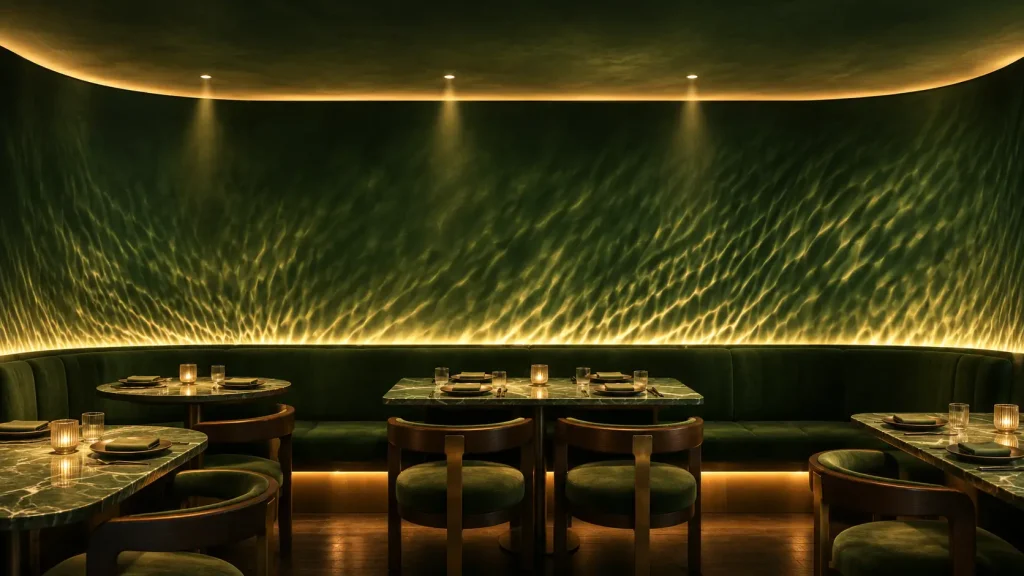
Cuisine and architecture are two professions with very different constraints and timescales. Yet they share a curiosity about materials, a passion for experimentation and a common pursuit of emotion. These connections inform our approach to design, while also revealing what makes the architect’s profession so distinctive.
A Shared Curiosity About Creation
We are fascinated by the way certain chefs approach their craft.
Their knowledge of ingredients, their mastery of techniques, their attention to detail, but above all, their freedom to explore, challenge established practices and discover new possibilities.
A chef may spend hours studying an ordinary ingredient, understanding its properties and experimenting with different transformations until unexpected qualities emerge.
What interests us is not simply the result, but the journey that leads to it: the trials, the mistakes, the discoveries, and the curiosity that encourages us to look differently at what we thought we already knew.
We recognise many of these concerns in our own approach to architecture.
We, too, work with materials, techniques, constraints and sensations. We seek to bring them into dialogue, find balance and create something that goes beyond the sum of its individual components.
Contemporary gastronomy inspires us precisely because it demonstrates how profoundly a discipline can evolve when knowledge and creative freedom reinforce one another.
Transforming Materials, Experimenting
In cooking, an ingredient is never limited to its original state.
A carrot can be served raw, roasted, fermented or dehydrated. Depending on the technique, its texture, flavour and even the way we perceive it can change entirely.
The raw ingredient remains the same. It is the transformation that reveals its potential.
This approach resonates directly with our relationship to architectural materials.
In architecture, we have access to an extraordinary variety of materials and products, yet we often approach them through predefined applications and finishes. We select wood, stone or metal by comparing their characteristics, colours and performance.
This knowledge is essential, but it represents only part of what materials can offer.
We like to think of materials not simply as products to be selected, but as substances to be explored.
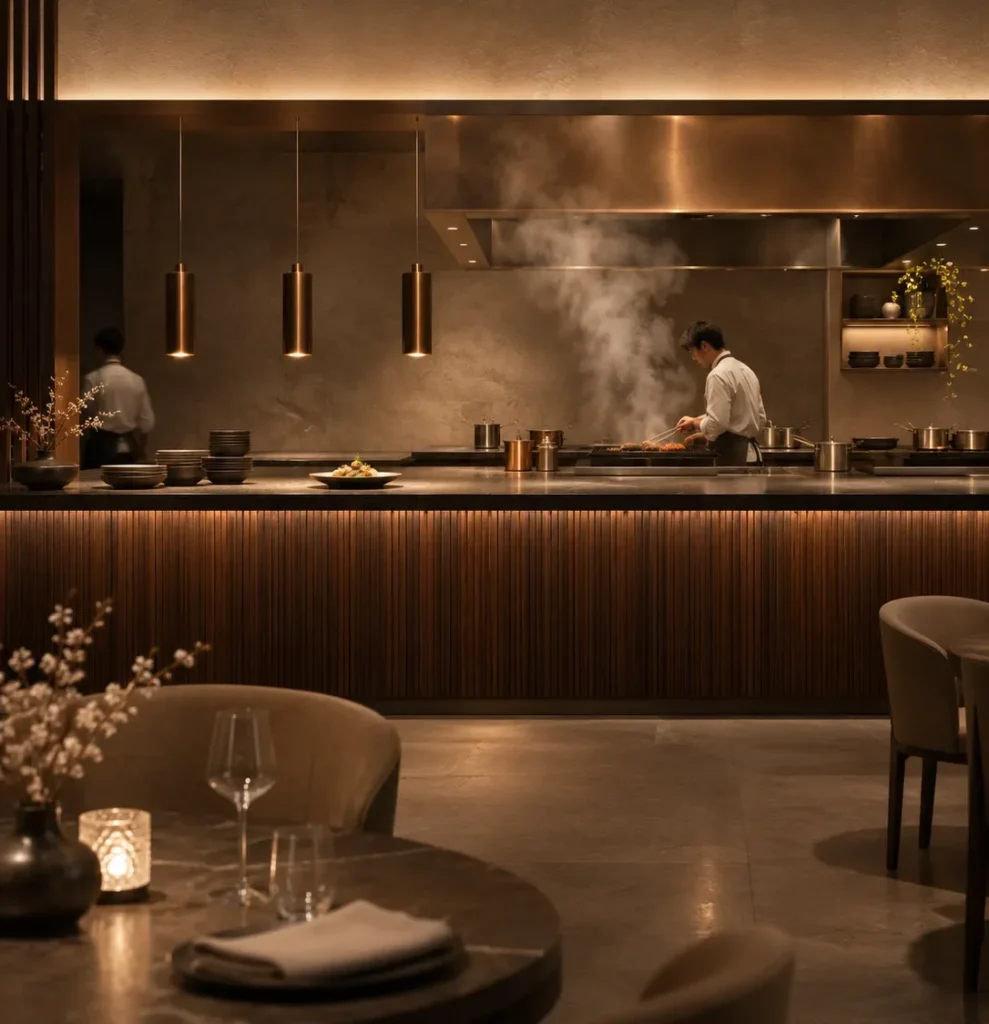
During an experimental wood-finishing process, for example, we tested a very simple technique combining lemon juice with the abrasive side of a kitchen sponge. Our intention was to work the surface differently from conventional sanding, exploring a matte, rough and organic patina reminiscent of naturally weathered wood.
What appeals to us about this experiment is that it does not necessarily require sophisticated products or complex techniques. Two everyday objects, rarely associated with architectural finishes, become tools for exploration.
From Drawing to Material
In our practice, this process continues through dialogue with craftspeople.
We conceive and draw architectural details that are often refined alongside those who will bring them to life. A conversation about a joint, a manufacturing constraint or a craftsperson’s particular understanding of a material can lead a design in a new direction.
We also develop prototypes and finish samples, comparing wood stains, through-coloured materials, textures and combinations to achieve the balance we are seeking.
These subtleties are sometimes impossible to appreciate fully in a digital image. Samples need to be observed, handled and tested against light and other materials.
This process is remarkably close to that of a chef refining a preparation until the balance feels right.
In both disciplines, precision comes as much from knowledge as from experience.
Experimentation is not about constantly pursuing novelty. It is about remaining curious enough not to settle for the first familiar solution.
Cuisine and Architecture: Composing a Sensory Experience
Today, much of our experience of architecture begins with photographs. They reveal volumes, materials and compositions. Yet they communicate only a fraction of what it means to experience a place.
Architecture is not simply something we look at. We move through it, touch it, listen to it and feel it.
The Therme Vals, designed by Peter Zumthor in Switzerland, is a particularly powerful expression of this sensory dimension.
In this building, stone, water and light are not merely elements of an architectural composition. They actively shape the visitor’s experience.
The feeling of stone against the body, the changing temperatures of the pools, the sound of water echoing through the spaces, the transitions between shadow and light: every sense is engaged.
The building reveals itself gradually, through movement and bodily experience. Architecture becomes an experience in its own right.
We find a similar approach in gastronomy.
A meal is never only about taste. It engages smell, texture, temperature, colour, sound and even the anticipation that precedes the arrival of a dish.
A chef composes with these sensations, playing with contrasts, transitions and surprises. They may seek a delicate balance or deliberately create a moment of disruption.
Architecture possesses this same ability.
The feeling of spaciousness can be heightened by first moving through a narrower volume. A smooth material takes on a different quality when placed beside a rough surface. Natural light can become particularly striking after passing through a darkened space.
We enjoy designing places where sensations develop in relation to one another, where every element contributes to an overall experience.
The Restaurant, Beyond the Plate
In a restaurant, this relationship becomes especially compelling.
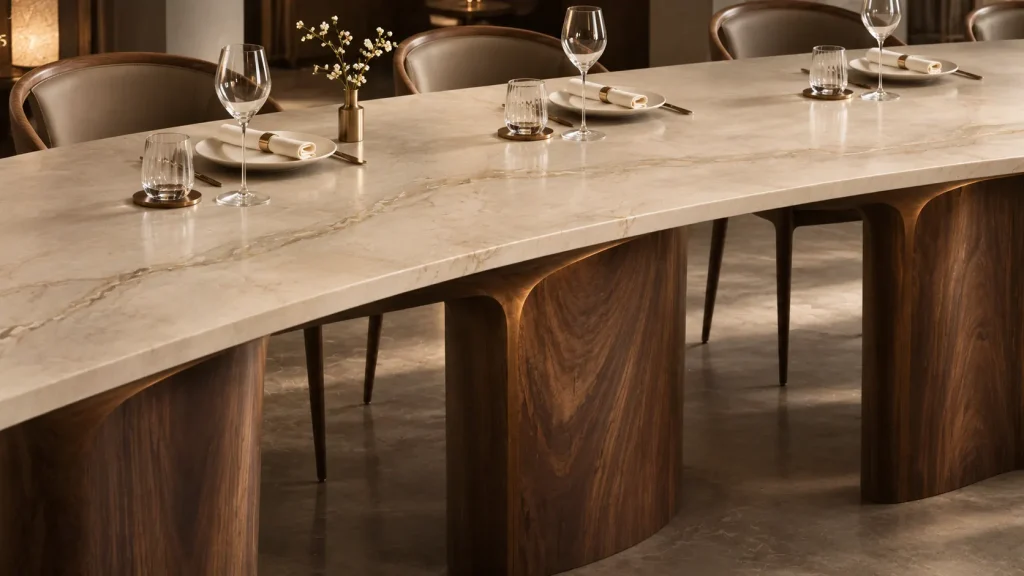
Cuisine and architecture come together within the same moment. Lighting, acoustics, the proportions of the dining room, furniture, materials and connections to the surrounding landscape all influence how we experience a meal.
But architecture must also understand what happens behind the plate.
A professional kitchen relies on precise organisation, movement, gestures and constant coordination. The quality of these spaces directly affects working conditions and, ultimately, the guest’s experience.
We find a certain beauty in arrangements that feel effortless precisely because they have been so carefully considered.
A successful restaurant is not simply a setting for food. It emerges from a dialogue between a culinary vision, the organisation of work and the spatial experience.
Architecture as Shared Intimacy
There is, however, a fundamental difference between the work of a chef and that of an architect, particularly when it comes to creative freedom.
When we choose a restaurant, we go there to discover a chef’s cuisine, their sensibility and their interpretation of ingredients.
We place a degree of creative trust in them. We would rarely think of walking into the kitchen to request more acidity in a sauce or ask for an ingredient to be replaced according to our personal preferences.
We are there precisely to discover a perspective different from our own.
The relationship between an architect and a client is different.
An architectural project often begins with a practical need, sometimes a deeply intimate one.
A family comes to us to imagine their future home. They tell us about their habits, their children, their relationships, their aspirations and the way they envision their future.
Through these conversations, we are invited into a part of their private lives.
We are not simply designing a building or arranging rooms. We are shaping the environment in which people will experience a part of their lives.
Architecture is a form of shared intimacy.
It emerges from the meeting between a client’s aspirations and an architect’s sensibility.
Naturally, a project must respond to real needs and to technical, financial and functional constraints. But our role does not end with providing a pragmatic solution.
Sometimes a client comes to us looking for a house that works. An architect can help them discover a way of living they had never imagined.
Light that transforms daily life, a space that encourages connection, or an arrangement that changes how family members come together or preserve their privacy.
Architecture has a particular ability to give tangible form to aspirations that are not always clearly expressed.
Creative Freedom Is Built on Trust
This relationship is one of the greatest privileges of our profession, but it also raises the question of creative freedom.
Unlike a chef, an architect often works with people who already have a relatively precise image of what they want.
This involvement is entirely natural. An architectural project represents a significant investment and has lasting consequences for those who will inhabit it.
Our work therefore involves building trust, listening and understanding, while also questioning assumptions and opening up new possibilities.
We do not see architects as mere executors whose role is to give form to a solution already decided upon.
An architect brings perspective, experience and sensibility, not to impose a personal vision, but to enrich that of the client.
It is within this balance between listening and creative freedom that the most distinctive projects emerge.
Trust allows architecture to move beyond simply answering a need and become a personal, meaningful and lasting experience.
Creation Through Encounter
Cuisine and architecture remain two very different disciplines, each with its own tools, constraints and timescales.
Yet in gastronomy we recognise a curiosity, a freedom to explore and an attentiveness to materials that resonate deeply with our own approach.
At Studio TAMY, we enjoy enriching our thinking through encounters with other creative disciplines.
Cooking, art, craftsmanship and design offer opportunities to question our habits, broaden our perspective and explore new approaches to architecture.
What interests us in meeting chefs is not simply understanding how they envision their restaurants.
It is discovering their creative processes, their relationship with materials, their methods of experimentation and the particular sensitivity that allows them to transform ingredients into experiences.
And, in return, sharing our own perspective on space, materials, everyday use and the intimacy of places.
We believe that the most interesting ideas often emerge when different sensibilities meet.
Gastronomy reminds us of the importance of experimentation and creative freedom.
Architecture adds a dimension of its own: the creation of something that endures through time, belongs to a particular place and becomes part of the individual lives of those for whom it was designed.
Two ways of working with materials, two ways of evoking emotion, and one shared conviction: creation finds its deepest meaning when it transforms the way we experience the world.
Studio TAMY — Architecture & Interior Design — Andorra
Further reading: Chefs et architectes : comment repenser le restaurant — Michelin Guide (French article).
Our approach: Studio TAMY — Architects in Andorra.