

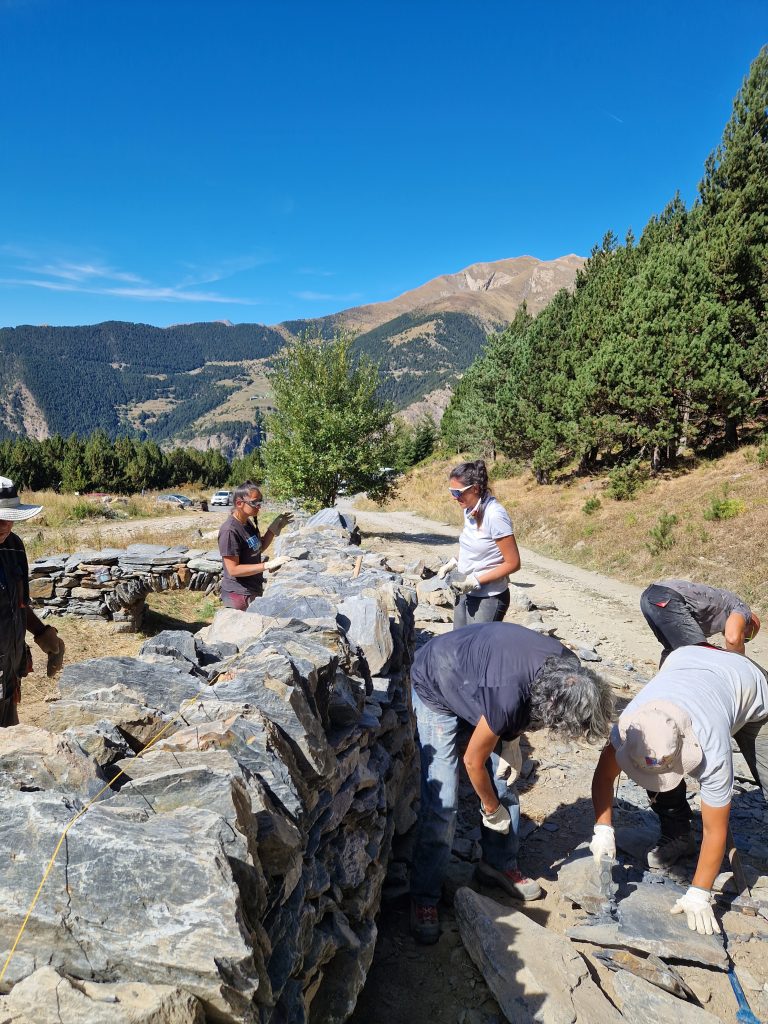
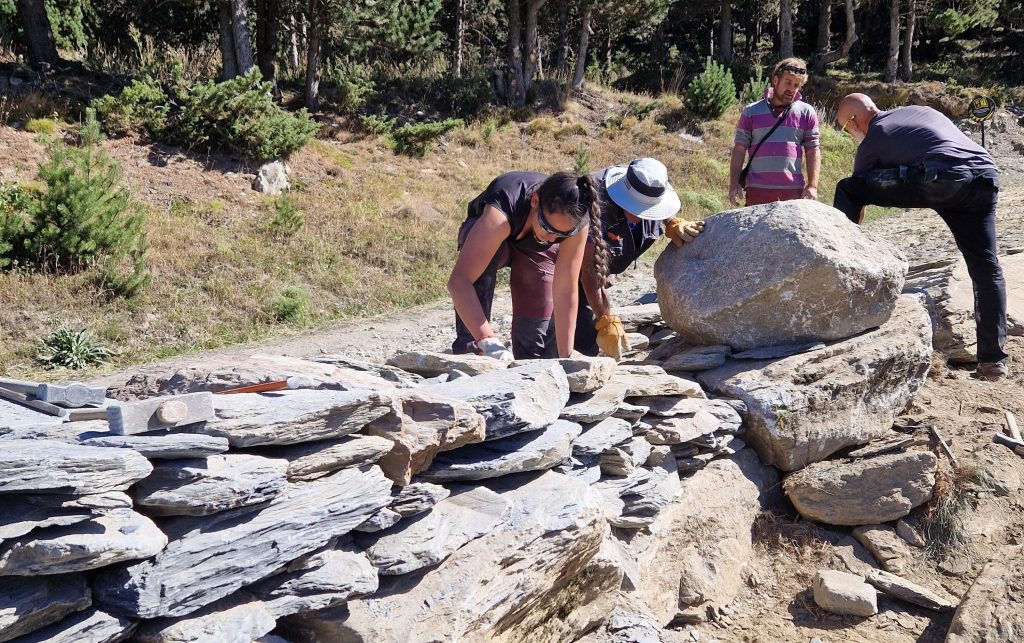
This week at Studio Tamy, we stepped away for a few days from drawings, screens and material samples to work directly with stone, tools and the ground itself.
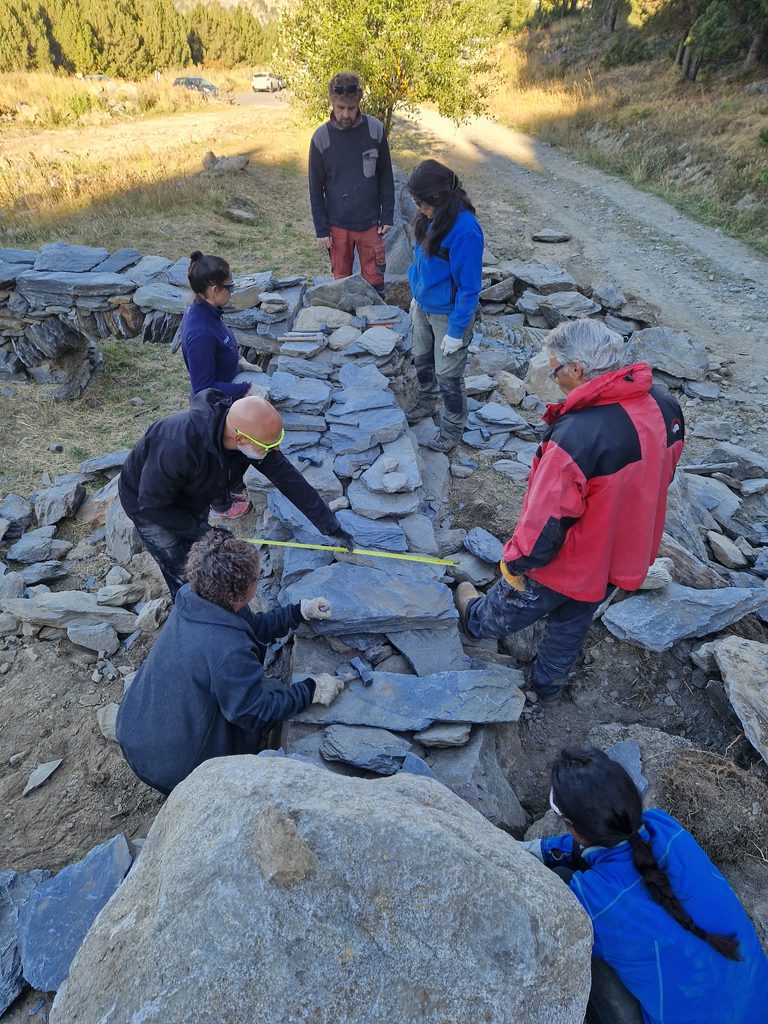
We took part in the eighth edition of Andorra’s dry stone construction training programme, organised by the Department of Cultural Heritage and the Centre de Formació al Llarg de la Vida as part of the European PETRA project. This first level focuses on understanding the principles of the technique and building a wall from its foundations.
For us, this is not simply about learning a construction technique.
It is also a way of understanding more precisely the territory in which we work.
Dry stone forms part of Andorra’s built heritage and has shaped its landscape for centuries. Walls, terraces, paths, livestock enclosures, huts and pastoral complexes reveal an approach to building directly connected to the mountains, the materials available and the needs of the people who lived and worked in this territory.
1. What exactly is dry stone construction?
The principle sounds simple: building with stone without using mortar to bind the pieces together.
The reality is much more precise.
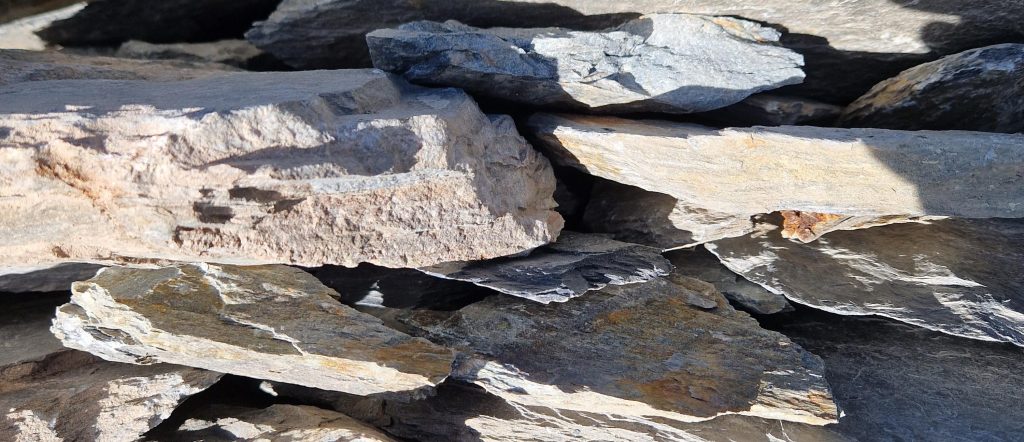
Stability comes from selecting the stones, positioning them correctly, understanding their geometry and contact points, and ensuring that loads are transferred safely towards the ground.
It is not simply a matter of stacking stones.
Each piece needs to be observed, understood and positioned so that it contributes to the overall equilibrium of the wall.
The official description of dry stone construction by Andorra’s Cultural Heritage Department highlights the same principle: strength comes from the way stones are worked and fitted together and from the use of gravity itself.
Physically working with the material makes one principle particularly clear: every stone affects the next one.
2. A technique that shaped Andorra’s landscape
Dry stone construction is closely connected to Andorra’s historic activities: agriculture, livestock farming and, in certain areas, the iron industry.
It was not used as decoration. It responded to practical needs.
Walls divided plots and controlled livestock. Retaining walls created cultivable terraces. Paths enabled movement through the mountains. Huts provided shelter and working spaces.
The National Archive of Andorra has documented the role of these structures in shaping the landscape. Kilometres of walls and other structures eventually shaped both valley floors and high-mountain landscapes.
Architecture appears here as a direct response to territory and use.
3. Walls, pletes, terraces, huts, paths and bridges
The same construction logic can take many different forms.
In Andorra, dry stone can be found in boundary walls used to divide land or contain livestock; pletes for gathering herds; retaining walls and agricultural terraces known as feixes; shepherds’ huts; paths and stone paving.
The dry stone training programmes developed in Andorra have addressed the construction and restoration of walls, huts, paths and even structures such as bridges, demonstrating the range of applications of the technique.
Stone is also fundamental to traditional Andorran architecture. It is important, however, to distinguish between stone construction and dry stone construction.
Many traditional buildings use mortared masonry and therefore do not strictly belong to the dry stone tradition.
4. What is an orri?
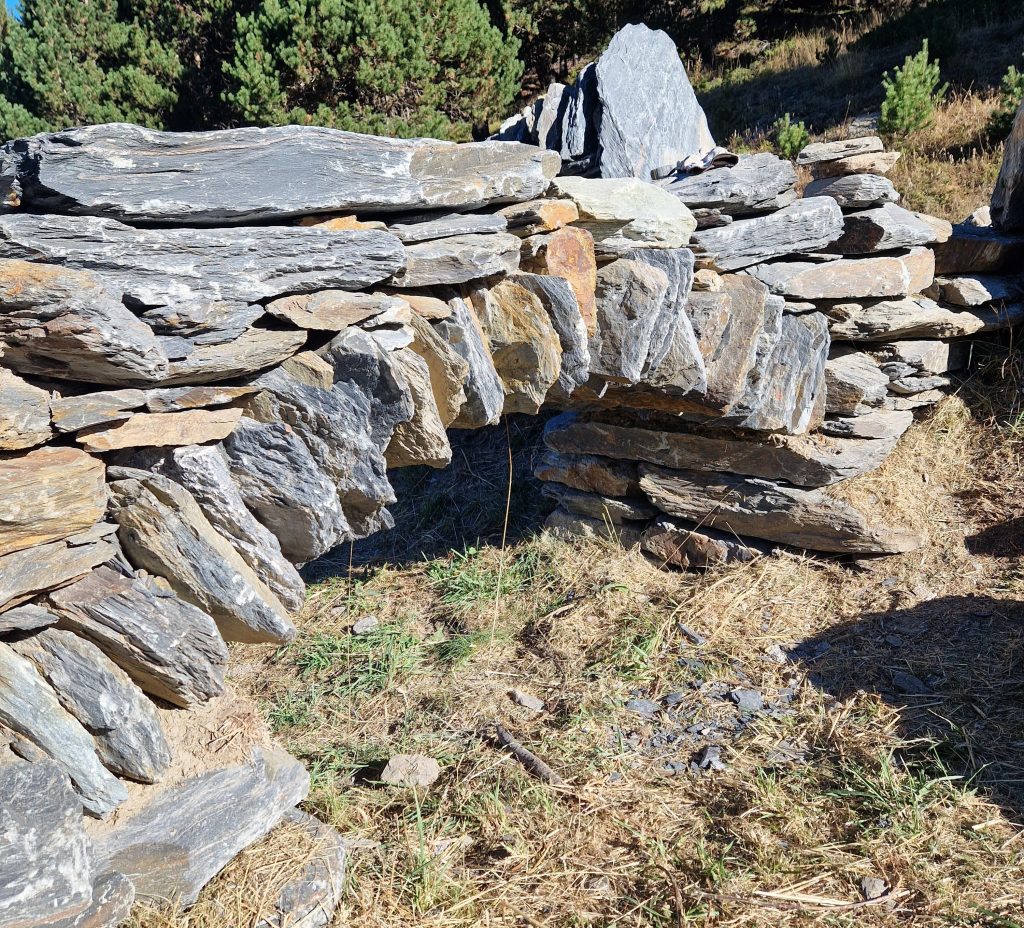
The term frequently appears when exploring Andorra’s high-mountain heritage.
An orri is not simply a small hut.
Historically, it refers to a group of structures associated with pastoral activity, particularly sheep and goats, and with activities such as milking and cheese production.
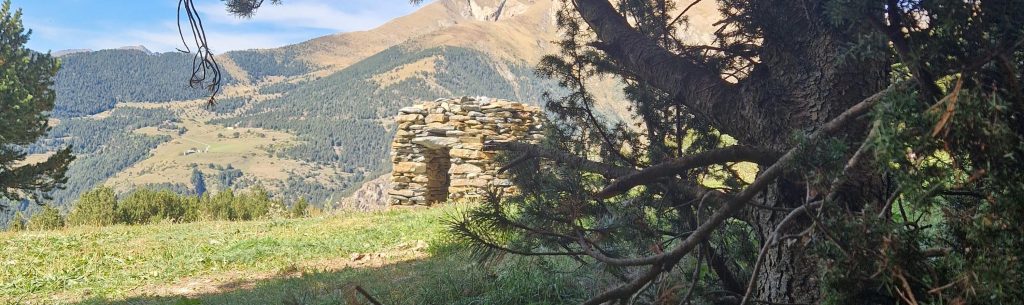
The archaeological research carried out in the Madriu-Perafita-Claror Valley documents complexes combining huts, pletes, livestock enclosures and munyidores, corridors through which animals could progressively be moved.
The Orris de Setut, Emportona, Encenrera and Estany Forcat show how these structures formed genuine mountain production systems rather than isolated objects.
Understanding this distinction changes the way the landscape can be read.
5. Why can a wall stand without mortar?
Precisely because the construction does not depend on a material that “glues” the stones together.
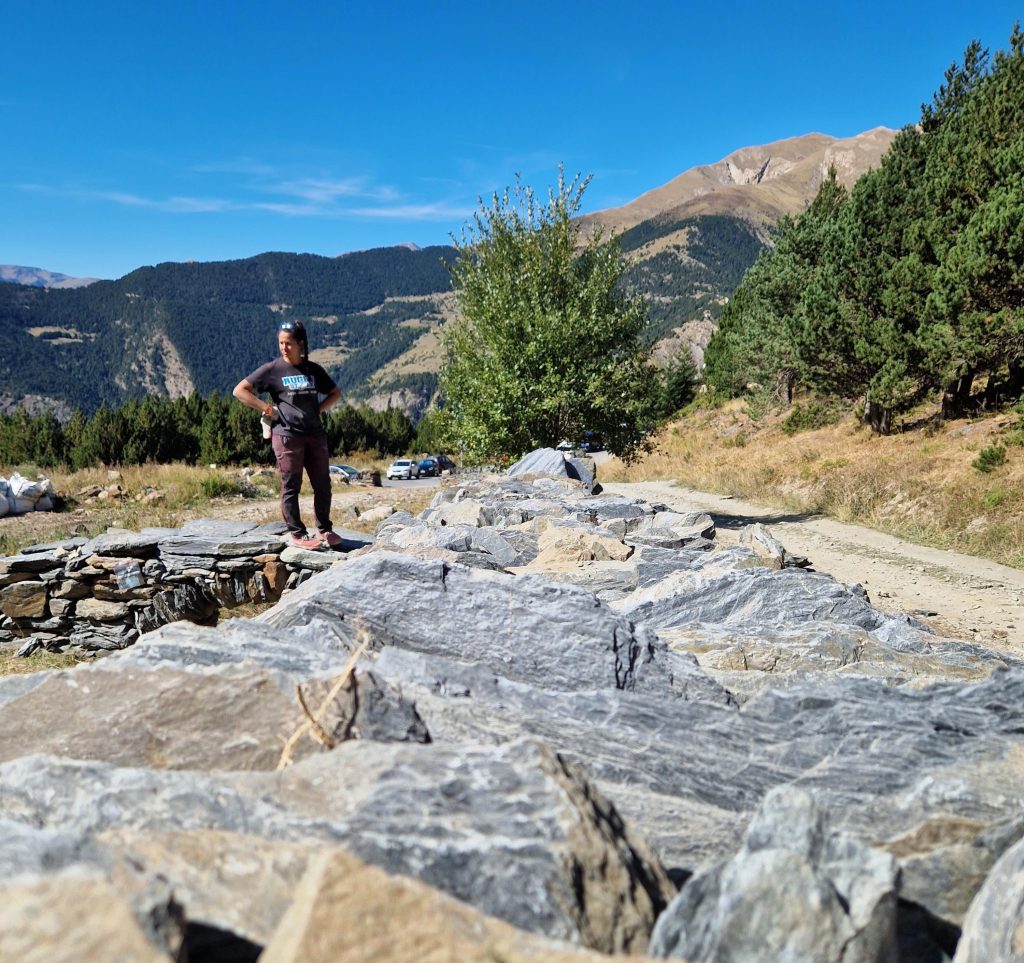
A dry stone wall works through mass, gravity, geometry and friction.
The studies of dry stone structures in Andorra’s valleys help explain the variety and construction logic of these elements.
Traditional walls may use two stone faces tied together, stones connecting both sides and a properly constructed inner core. In retaining walls, the geometry and batter of the face also help resist the pressure of the ground behind it.
The arrangement of the stones must avoid continuous weak joints and distribute loads effectively.
Huts can use even more sophisticated principles. Some traditional roofs rely on a corbelled or false dome, progressively bringing each course inward until the space is closed. The Cabanes del Castellar preserve examples of this construction principle in Andorra.
A technique that appears elementary therefore contains a considerable amount of geometry and structural understanding.
6. Construction adapted to a mountain environment
Dry stone has another particularly interesting characteristic: the way it interacts with water.
Unlike a completely impermeable wall, the joints allow part of the water to pass through and drain.
On agricultural and mountain land, these structures help stabilise soil, limit erosion and manage runoff.
Andorra’s Department of Cultural Heritage also highlights their contribution to biodiversity and their ability to integrate into the landscape through the use of materials found locally.
Long before sustainable construction became a contemporary objective, this architecture already followed a very direct principle:
use material available nearby, transform it as little as possible and arrange it so that it can continue working for decades.
7. Heritage, but also living knowledge
In 2018, UNESCO inscribed the art of dry stone construction and its associated knowledge and skills on the Representative List of the Intangible Cultural Heritage of Humanity.
In 2024, UNESCO officially extended the inscription to include Andorra, together with several other newly participating countries.
The word intangible is important.
What is being protected is not only the existing walls.
It is also the knowledge needed to build, maintain and repair them, and to pass the technique on.
Training therefore plays a fundamental role.
Initiatives such as Primera Pedra and, today, the European PETRA project and dry stone training programmes contribute directly to documenting, conserving and transmitting this heritage.
8. What can contemporary architecture learn from dry stone?
Using dry stone today does not mean trying to reproduce the architecture of the past literally.
The interesting question is understanding why it works.
The technique speaks about economy of means, knowledge of materials, adaptation to topography, drainage, durability and repairability.
It also demonstrates that a structure can belong deeply to a place without relying on a spectacular formal gesture.
These principles remain highly relevant.
In a contemporary Andorran project, understanding dry stone can inform the design of a retaining wall, a plot boundary, an entrance, a garden or a landscape intervention.
In other situations, it will not be the appropriate technique.
The objective is not to use dry stone everywhere, but to recognise when it makes sense and understand how it should be built correctly.
9. Learning with our hands changes the way we design
As architects, we are accustomed to representing materials through plans, sections, details and specifications.
Building introduces a different level of understanding.
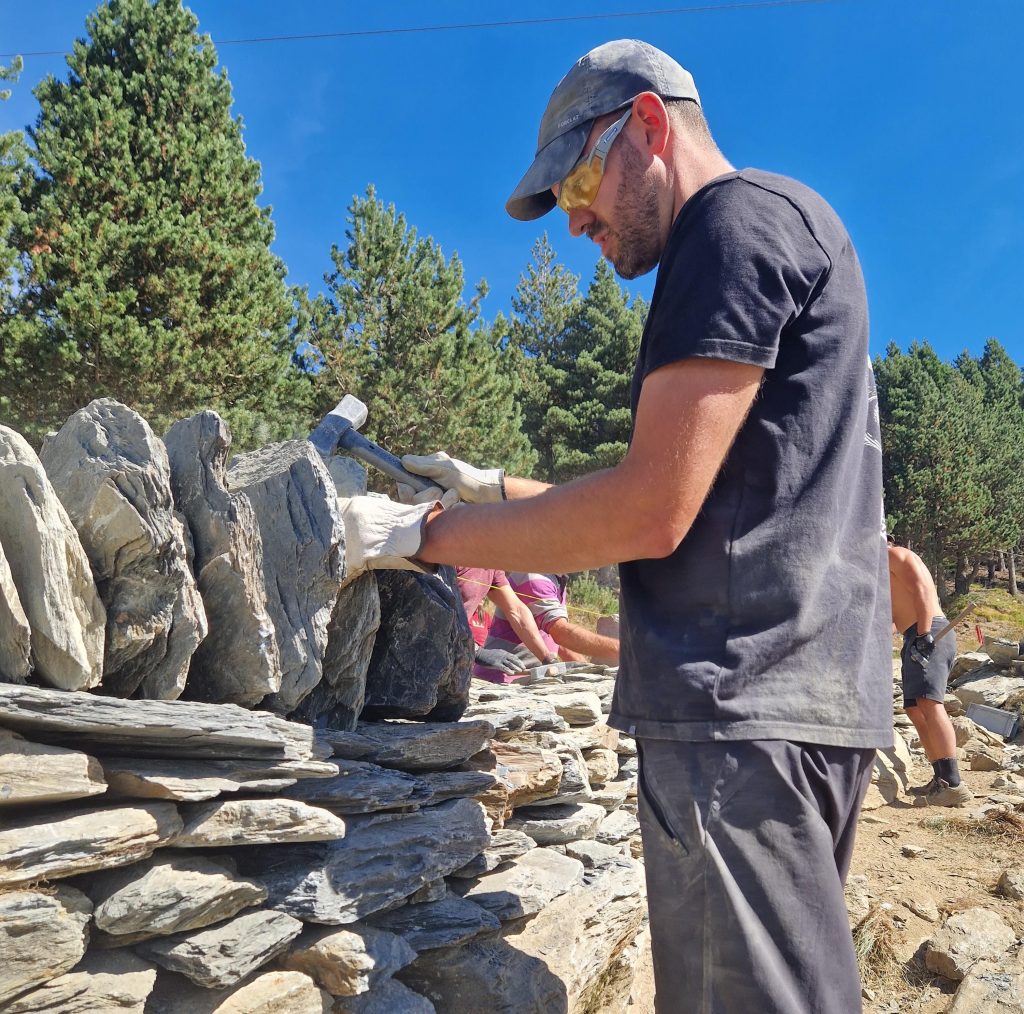
The weight of a stone, the irregularity of its faces, the difficulty of finding a stable bearing point or the importance of a piece placed twenty centimetres lower are understood differently when they are experienced directly.
This relationship between drawing and making is fundamental to us.
The aim is not to replace the knowledge of specialist craftspeople.
Quite the opposite.
Understanding the technique more deeply allows us to communicate with them more precisely, design more coherent details and better understand the consequences of a decision made on a drawing.
10. Learning in order to design from Andorra
Studio Tamy develops its practice from Andorra.
For us, working here means more than applying a design to a plot located within the country’s borders.
It means understanding the climate, topography, materials, techniques and building culture that have shaped the territory.
Learning dry stone construction forms part of that process.
We are not interested in literally reproducing a traditional image.
We want to understand the principles behind it so that, project by project, we can decide what should be preserved, what can be reinterpreted and what vernacular architecture can still teach us today.
Building a wall for a week does not turn an architect into a marger, a specialist dry stone craftsperson.
But it changes the way you look at the next wall.
For us, that way of looking is also part of architecture.
Frequently asked questions
What does dry stone construction mean?
It means constructing by selecting and positioning stones without using mortar as a binding material. Stability comes from geometry, contact between the stones, gravity and the correct arrangement of the structure.
What is an orri in Andorra?
An orri is a mountain pastoral complex historically connected with livestock farming, particularly milking and cheese production. It may include huts, livestock enclosures, pletes and munyidores.
Is dry stone construction still used today?
Yes. In addition to restoring existing heritage structures, it can be used in new construction, landscape projects, walls, paths and other interventions when appropriate to the project and site.
Is Andorra’s dry stone tradition recognised by UNESCO?
Yes. The art of dry stone construction was first inscribed by UNESCO in 2018, and the inscription was extended in 2024 to officially include Andorra.